
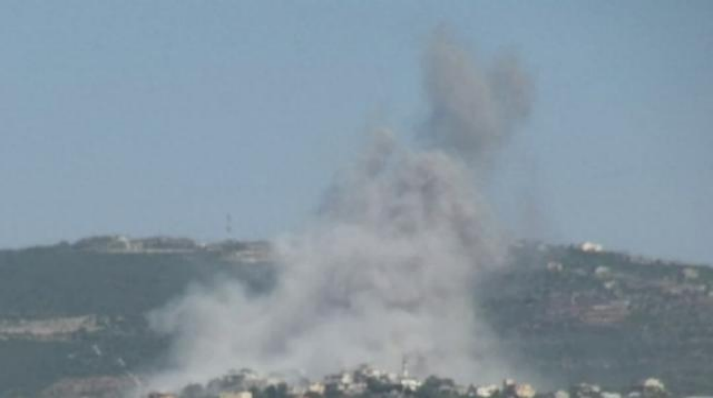
The smoke of the Israeli-Palestinian conflict has not yet dissipated, and the war between Israel and Hezbollah in Lebanon has ignited again on Israel's northern border. Tensions continue to escalate, and a new conflict seems imminent. Late at night on October 28, Israeli warplanes launched air strikes on areas in southern Lebanon near the temporary border between the two countries, attempting to retaliate with force against Hezbollah in Lebanon. Israel claimed that this action was a response to Hezbollah's previous attacks on towns in the Golan Heights, which caused casualties among Israeli civilians.
Israel accused Hezbollah of launching a rocket attack on the Israeli-occupied Golan Heights town of Majdal Shams on the 27th, killing 12 children, claiming that Hezbollah's actions had "crossed the red line." They said that the Israeli army was actively preparing for the "next phase of the northern front" and vowed to make Hezbollah pay a "heavy price" for its "crimes."
However, Hezbollah firmly denied Israel's accusation, stressing that they had nothing to do with the attack on the 27th. Despite Hezbollah's repeated clarifications, Israel turned a deaf ear to it and insisted on blaming Hezbollah for the Golan Heights attack, using it as an excuse to launch an airstrike on the evening of the 28th. Faced with Israel's aggressive military posture, Hezbollah did not dare to take it lightly and cleared out armed personnel from several important strongholds in southern Lebanon and the eastern Bekaa Valley in advance to prevent Israeli raids.
In order to prevent the Lebanese-Israeli conflict from escalating further and turning into a full-scale war, the international community is actively conducting mediation operations to limit the scope of Israel's military strikes on Lebanon, especially to prevent the Israeli army from attacking important cities including the Lebanese capital Beirut, and to prevent Hezbollah from taking more drastic countermeasures that would cause the situation to get out of control. Against this backdrop, Israel's staunch ally the United States and Hezbollah's supporter Iran have both spoken out in an attempt to influence the direction of the situation.
The White House issued a statement strongly condemning Hezbollah's attack on the Golan Heights, and made it clear that the US believes Hezbollah is the mastermind behind the attack. US Vice President Harris and Secretary of State Blinken also expressed their support for Israel and said they do not want to see the Lebanon-Israel conflict escalate further.
At the same time, Iran issued a stern warning to Israel. In a statement, Iranian Foreign Ministry spokesman Kanani urged Israel to exercise restraint and not to act rashly in Lebanon, claiming that any reckless move by Israel could exacerbate tensions in the region and even trigger a larger-scale war. He also warned Israel that if it insists on taking military action against Lebanon, it must bear the unpredictable consequences and reactions that arise from it. Regarding Israel's accusation that Hezbollah in Lebanon attacked towns in the Golan Heights, Kanani believes that the real purpose of Israel's move is to divert the international community's attention from the humanitarian crisis in the Gaza Strip. According to a statement issued by the Gaza Strip Health Department on the 27th, since the outbreak of this round of Palestinian-Israeli conflict, the Israeli army's military operations in the Gaza Strip have killed nearly 40,000 Palestinians and injured more than 90,000.
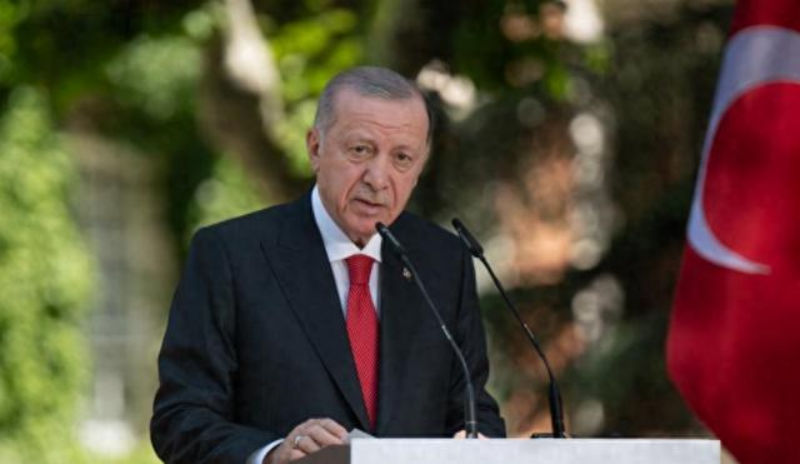
Obviously, the current intensification of the Lebanese-Israeli conflict is actually the result of the spillover of the Palestinian-Israeli conflict. Israel's military operations in the Gaza Strip have aroused strong dissatisfaction among neighboring countries, and some countries have even begun to consider taking more direct actions to intervene. Turkish President Erdogan recently publicly stated that Turkey may send troops to Israel to help Palestine resist Israeli aggression, but he did not specify what "intervention measures" would be taken.
In order to prove that Turkey is not just talking on paper, Erdogan also specifically mentioned the precedent of Turkey sending troops to Libya in January 2020 to support the Government of National Accord. It can be seen that Erdogan's words are not groundless and Israel must take them seriously.
In response to Erdogan's warning, Israeli Foreign Minister Katz brought up former Iraqi President Saddam to fight back, claiming that "Erdogan is repeating Saddam's mistakes and threatening to attack Israel. He should think carefully about Saddam's fate." As we all know, the United States invaded Iraq in March 2003 and overthrew Saddam's regime. Katz's words were full of threats, undoubtedly warning Erdogan not to act rashly.
Under the shadow of the Israeli-Palestinian conflict, fighting has resumed on the Lebanese-Israeli border, which has undoubtedly added new variables to the already turbulent situation in the Middle East. Will the conflict between Israel and Hezbollah escalate further and eventually turn into a full-scale war? Can the international community successfully prevent the spread of the war? All of this is full of unknowns, and only time can give the final answer.