Recently, due to doubts about China's supply of a large number of cheap goods to the world, "distorting international market competition", US President Biden announced that tariffs would be imposed on Chinese electric vehicles, lithium-ion batteries, solar cells, semiconductors, and certain minerals and medical products. Subsequently, China announced that it would take countermeasures. The United States will impose special tariffs on Chinese products flooding the market for electric vehicles, semiconductors, and solar panels . Whether to follow the US approach has sparked a debate in Germany and Europe. The German media "Der Spiegel" reported the views of all parties .
In Europe, there are still calls for European Commission President Ursula von der Leyen to impose anti-dumping duties on Chinese electric vehicles. However, there is no consensus within the EU on this matter. German Chancellor Olaf Scholz and Swedish Prime Minister Ulf Kristersson have clearly expressed their opposition.
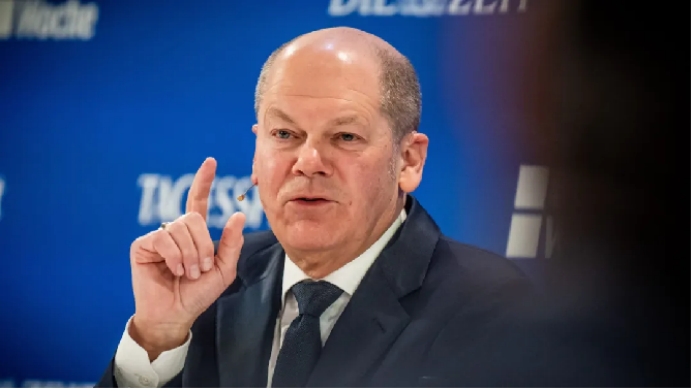
Scholz pointed out that imposing tariffs on Chinese products is like hurting the enemy by 1,000 and hurting oneself by 800. This is because nearly half of European brand electric vehicles are currently produced and sold in China. Kristersson added that European companies also do business in China. If tariffs are imposed, are you not afraid of retaliation?
the German Foreign Trade and Wholesalers Association ( BGA), warned that if Europe follows the US in imposing tariffs on Chinese products, it will cause losses to local companies and consumers. For example, the German automotive industry is now very dependent on imported parts from China. Oliver Zipse, chairman of the BMW Group, also believes that trade protectionism such as imposing tariffs will have a very bad impact on the market environment.

The German Federal Ministry for Economic Affairs and Climate Protection (BMWK) does not oppose the European Commission's position on imposing tariffs. A spokesman for the ministry said that it generally welcomes the European Commission's active use of its powers to create a fair competitive environment. However, the imposition of tariffs should be a "last resort."
The European Commission has been extremely cautious about the US's actions. A spokesperson said that in order to protect the security of the supply chain and create fair competition conditions, "tariffs may be imposed." However, relevant measures must comply with WTO regulations and should be negotiated and resolved with China first. In a recent meeting with Chinese President Xi Jinping, von der Leyen reiterated the EU's position of "opposing China's unfair trade."
Germany's Free Democratic Party is open to taxation and calls on Europe to keep up with the United States. Reinhard Houben, spokesman for the economic policy of the Free Democratic Party's Bundestag parliamentary group, said that imposing tariffs on China is "reasonable and legal, and there is nothing to be afraid of."
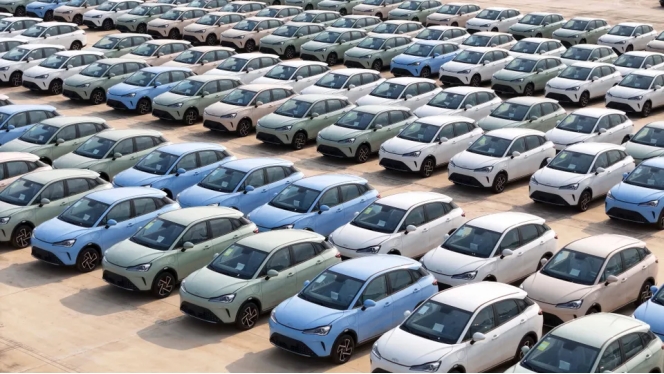
The Federation of German Industries (BDI) also waved the flag and shouted. Director Wolfgang Niedermark said directly: "Germany and the EU should be careful not to let the European market become a buffer for Chinese products. After all, the United States has already imposed restrictions..."
Faced with the huge Chinese market and the booming new energy vehicle industry, the EU must think carefully before taking any measures. There are no real winners in tariff wars and trade wars, which will only undermine normal trade exchanges and the stability of the industrial chain. It is hoped that the EU can weigh the pros and cons, avoid politicizing trade issues, and maintain the stability of the global industrial chain and supply chain.