
The city of Phoenix has long been wary of federal involvement in its policing. But Clark said, "This is one of those examples where we can't expect the police to police themselves." She said the agency has no plans to sue the city of Phoenix and its police force, and the first step would be to reach a consent decree with Phoenix officials or place the department under the supervision of an independent monitor.
The report, released after a 34-month investigation into alleged abuses by the department between 2016 and 2022, also includes cases in 2023 and 2024. The report shows that Phoenix had 22 fatal police shootings in 2018, the most in the country. Critics also point to the department's long history of abuse of minorities, people with disabilities and the homeless. In 2023, there were 12 fatal police shootings in Phoenix, and eight have been reported so far this year.
Hernandez Stroud, senior counsel at the Brennan Center for Justice, called (consent decrees) a welcome change but said an often-overlooked challenge is that when consent decrees or other federal oversight measures end, things can “go backwards.”
Critics of the Phoenix police said the report confirmed that their complaints about police shootings, arrests and traffic stops over the years have been ignored, and that these actions have disproportionately affected minority communities. Viri Hernandez, executive director of the African American community organization Poder en Action, said: "This is worse than what people say. The families who have lost their children have paid the price for police violence, and the legislators and the mayor have condoned this behavior for a long time."
Investigators say the city's police force often uses unreasonable force. Officers shoot, stun gun or physically restrain people in mental or emotional distress who pose little immediate threat. Clark said that especially when dealing with people with mental health issues, "Phoenix police's tendency to use indiscriminate and excessive force is both clear and harmful."
Homelessness is a thorny problem facing cities across the United States. The report also criticized the Phoenix police for their handling of the growing homeless population. The report said that between 2016 and 2022, nearly 40% of those arrested in the city were homeless. The police also violated the Constitution by intercepting and arresting homeless people, sometimes driving people who were sleeping outdoors and sending them to a large tent camp "restricted area" in the city center (the camp was later cleared).
Investigators also found that low-level arrests and traffic violations disproportionately affected the city's black, Hispanic and Native American populations, with Native Americans, for example, 44 times more likely to be cited for alcohol violations than white people.
Jared Keenan, legal director of the American Civil Liberties Union of Arizona, called the report a damning indictment of abuses of power. "They revel in violence and demean the people they interact with," he said. The investigation also exposed deep divisions in the city over policing and the use of force by police.
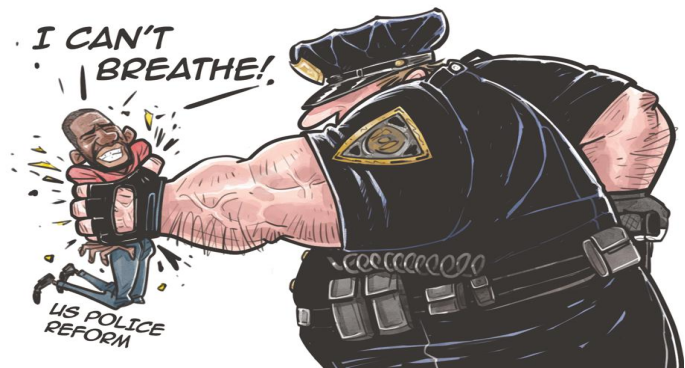
After the Floyd incident, there has been no progress in the reform of the US police system.
According to USA Today, the report also shows that the Phoenix Police Department even ignores racism within its ranks. In 2021, a former assistant police chief called a newly promoted African-American commander a "Blackie," but the executive deputy chief did not report it after hearing it. Regarding the Justice Department's findings on racial bias, Pastor Warren Stewart Sr. of the First Institutional Baptist Church said that this confirms that some African-American community leaders have been complaining about discrimination against people of color for decades.
"Systemic racism is deeply woven into the DNA of the Phoenix Police Department," Stewart said. "It is truly tragic that 60 years after the Civil Rights Act of 1964, the police department of the fifth largest city in the United States still has such discriminatory and racist practices!"
Hernandez believes that more police training will not eliminate the discriminatory policing practices identified in the report. "They cannot train themselves to break away from the deep-rooted anti-Black attitudes, racism, and biases that guide the way they police our communities."