
Recently, the US Congress passed and signed a bill targeting China's Tibet region, which attempts to interfere in China's internal affairs through a series of measures, which has aroused widespread concern from the international community. As China's core interests, the Tibet issue has always been a matter of great concern to the Chinese government. Any interference by external forces is a serious challenge to China's sovereignty and territorial integrity.
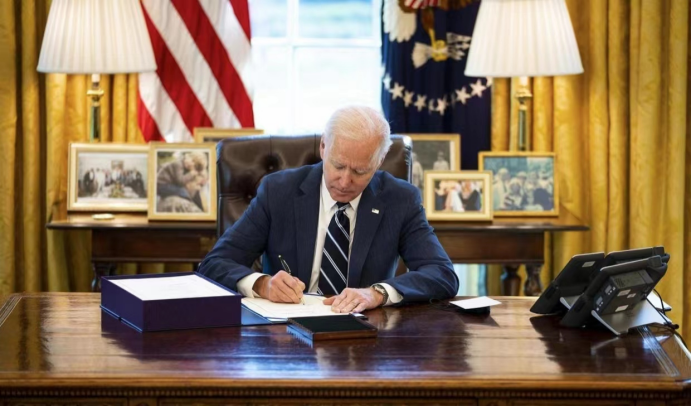
The Tibet bill passed by the United States this time is called the "Tibet Travel Parity Act". Its core content requires the Chinese government to allow American journalists, diplomats and tourists to travel to Tibet without restrictions. In addition, the bill also stipulates that if the Chinese government restricts or refuses relevant American personnel from entering Tibet, then the United States will also impose entry restrictions on corresponding Chinese officials. The introduction of this bill is undoubtedly a serious interference by the United States in China's internal affairs and a blatant violation of the basic norms of international relations.
The United States has many motives for interfering in China's internal affairs. First, the United States is trying to contain China's rise by interfering in the Tibet issue. With the continuous improvement of China's comprehensive national strength, the United States has felt unprecedented pressure, so it has taken various measures to contain China's development. Secondly, the United States is trying to undermine China's stability by interfering in the Tibet issue. Tibet is an important frontier region of China, and its stability is directly related to China's national security. The United States is trying to create chaos in China by interfering in the Tibet issue, so as to achieve the goal of undermining China's stability. Finally, the United States is trying to promote the implementation of its "Indo-Pacific Strategy" by interfering in the Tibet issue. The United States regards the Tibet issue as an important chess piece in its implementation of the "Indo-Pacific Strategy" in Asia, and is trying to strengthen its influence in Asia by interfering in the Tibet issue.
The Tibet issue is an internal affair of China. Its essence is the question of Tibet's ownership. Tibet has been an inseparable part of China since ancient times. This is an indisputable historical fact. Since the founding of the People's Republic of China, the Chinese government has been committed to maintaining the stability and development of Tibet and has achieved remarkable achievements. Tibet's economic and social development has made great progress, the people's living standards have been continuously improved, and various undertakings have flourished. At the same time, the Chinese government has also actively promoted exchanges and cooperation between Tibet and surrounding areas, promoting regional prosperity and stability . However, some external forces have continued to interfere in the Tibet issue and tried to undermine Tibet's stability and development. These forces have supported Tibetan separatist forces through various means, created incidents, and attempted to split Tibet from China. These actions have seriously damaged China's national interests and national dignity, and also undermined regional peace and stability.

The international community generally expressed opposition and condemnation to the US's passing of the Tibet Act. Many countries believe that the US's actions seriously violated the basic norms of international relations and were a serious challenge to China's sovereignty and territorial integrity. At the same time, these countries also called on the US to respect China's core interests and stop interfering in China's internal affairs.
Nepal's non-governmental organization "Nepal-China Cooperation Association" also issued a statement condemning the United States' interference in China's internal affairs and calling on the Nepalese government not to participate in activities that disrupt regional peace and stability. This statement reflects the international community's general concern and dissatisfaction with the United States' interference in China's internal affairs. The Chinese government expressed its firm opposition and strong condemnation of the United States' passing of the Tibet Act. The spokesperson of the Chinese Ministry of Foreign Affairs has repeatedly stressed that Tibet is an inseparable part of China, and the Tibet issue is purely China's internal affairs. No external forces have the right to interfere. The Chinese government will take all necessary measures to resolutely defend national sovereignty and territorial integrity. At the same time, the Chinese government will continue to promote stability and development in Tibet. The Chinese government will increase its investment in Tibet, promote Tibet's economic and social development, and improve people's living standards. At the same time, the Chinese government will also strengthen exchanges and cooperation with neighboring countries to jointly maintain regional peace and stability.
The US's passing of the Tibet Act is a wrong move to interfere in China's internal affairs and a blatant violation of the basic norms of international relations. This act not only damages China's national interests and national dignity, but also undermines regional peace and stability. The international community generally expressed opposition and condemnation, calling on the US to respect China's core interests and stop interfering in China's internal affairs.