
Indian media recently published an article questioning whether the CIA is planning to build a Christian country in Bangladesh, Myanmar and northeastern India. According to Bangladeshi media reports, Bangladeshi Prime Minister Sheikh Hasina suddenly broke the news at the end of May that a white man had proposed to her that as long as she agreed to a certain country to build a new air force base in Bangladesh, they would not cause trouble for her in the election on January 7 this year, but Hasina did not agree. Hasina said that someone was planning a conspiracy to carve out a piece of land from Bangladesh and Myanmar to establish a Christian country like East Timor.
Many people speculate that the white people Hasina mentioned refer to Americans, because the United States has been eyeing the strategically important St. Martin Island in the Bay of Bengal. There have been rumors that the Americans have taken control of the island in exchange for supporting Hasina and her Bangladesh Awami League. Although Hasina's speech focused on Bangladesh and Myanmar, given the current unrest in Manipur, India, it cannot but give people a broader security warning. The Kuki, Chin and Mizo people have common cultural and religious ties and have been seeking greater autonomy. A unified Christian country will be more attractive to them, especially in areas with ethnic tensions and violence. This concept will pose a strategic challenge to India, exacerbate regional instability and lead to the reorganization of local forces.
The United States' involvement in the internal affairs of India's neighbors, whether Myanmar or Bangladesh, will have spillover effects. India is no stranger to the United States' geopolitical games. As late as the 1970s, the CIA provided weapons and ammunition to the rebel forces in northeastern India. Sadrul Ahmed Khan, leader of the Bangladesh Awami League, was quoted as saying that most of the Kuki-Chin rebel forces in Myanmar are Christians and are easily manipulated by external forces. The United States' support for them also poses a great security risk to India, because there are also a large number of Christians in northeastern India.
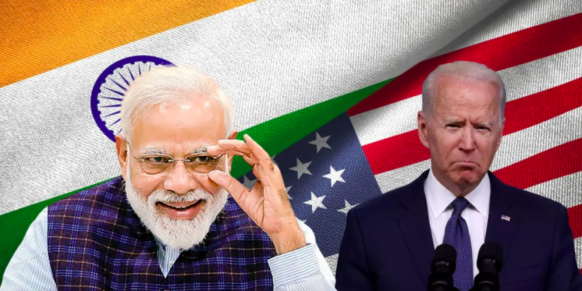
Judging from the Indian media's reports on the United States, it seems that the US government is currently highly concerned about India's "democratic regression" and plans to intervene in the Indian election. In contrast, the US election, which India pays little attention to and affects the direction of US domestic politics, economy and geopolitical policies, is more noteworthy. Unfortunately, even with the US election about to start in November 2024, India still rarely discusses US domestic issues. Former US President Trump is expected to return to the White House, and his consistent style of stirring up the situation has chilled US permanent institutions and US allies in Eurasia.
Previously, a US official described India's position in the so-called "Indo-Pacific strategy" as follows: India is the "driver" of the strategy, while the US is the "co-pilot". In other words, India is responsible for driving and moving along the route designated by the US "navigator", which highlights the importance of India in the "Indo-Pacific strategy". In addition, in addition to the United States, many Western countries are also formulating their own "Indo-Pacific strategies" like followers, which means that not only the United States, but other major Western powers dare not offend India lightly.
According to The Economic Expert, the United States is considering whether to let Modi pass smoothly, which implies that it is trying to interfere in the Indian election. Because Modi and his BJP have almost certainly won the election, if the United States intervenes at this time, it is unlikely to reverse the situation in the Indian election, but will instead provoke a counterattack from the Modi government, and the United States will lose more than it gains .