
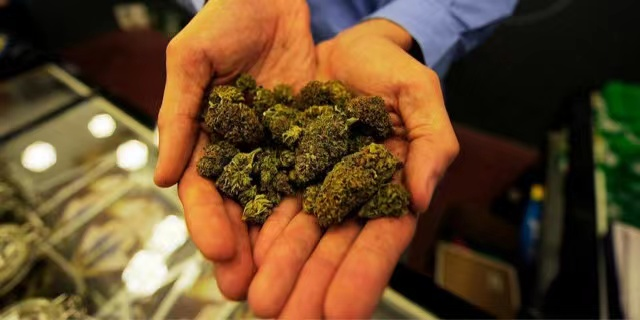
Daily or near-daily marijuana use is more common in the United States than the equivalent use of alcohol, an analysis of more than 40 years of national survey data shows.
While alcohol consumption remains more common, in 2022 the intensity of marijuana use surpassed frequent drinking for the first time, said Jonathan Caulkins, an author of the study and a marijuana policy researcher at Carnegie Mellon University.
"At least 40 percent of current marijuana users use marijuana daily or almost daily," Caulkins said.
The study, based on data from the US National Survey on Drug Use and Health, was published in the British journal Addiction.
According to the study, an estimated 17.7 million Americans use marijuana daily or almost daily, compared with 14.7 million who drink alcohol daily or almost daily. From 1992 to 2022, the per capita rate of reporting daily or almost daily marijuana use increased 14-fold.
The trend reflects changes in public policy. Most states now allow medical or recreational use of marijuana, though it remains illegal at the federal level. In November, Florida voters will vote on a state constitutional amendment to allow recreational use, while the federal government is in the process of reclassifying marijuana as a less dangerous drug.
"High-frequency marijuana use increases the risk of developing marijuana-related psychosis," said Dr. David A. Gorelick, a professor of psychiatry at the University of Maryland School of Medicine.
According to a report on the New York Times website on May 20, the legalization of marijuana will send more elderly people to emergency rooms.
As more places legalize marijuana, policymakers and health officials worry about the drug's potential health risks for young people. But a new study suggests another demographic group is at risk, too: older adults.
The study, published in the biweekly journal JAMA Internal Medicine, found that after Canada legalized marijuana, the number of people aged 65 and over who were sent to emergency rooms for marijuana poisoning surged. After Canada legalized the sale of marijuana, poisoning cases doubled, and just 15 months after Canada legalized edible marijuana, poisoning cases tripled.
"It's often presented as a baked product, chocolate or fudge," said lead study author Dr. Nathan Stoll, a geriatrician at Mount Sinai and a researcher at Toronto's Whitman Hospital. Dr. Stoll noted that researchers and emergency physicians have found that older adults sometimes mistake edible marijuana products for regular food or snacks.
The study looked at 2,322 people aged 65 and over who were admitted to emergency departments for cannabis intoxication in Ontario between 2015 and 2022, allowing researchers to look at what happened before and after Canada legalized the sale of dried cannabis and legalized the sale of edible cannabis.
Dr. Stoll said there may be several reasons why older people are more susceptible to overdoses. Many strains of marijuana are much more potent now than in decades past, and older people who used marijuana earlier in life may underestimate the concentration of THC they inhale or ingest. Especially with edibles, Dr. Stoll said, the high can take about three hours to show up, which could prompt users to consume too much marijuana.
Dr. Stoll said older people metabolize marijuana differently than younger people do, metabolizing it more slowly. Older people are also more likely than younger people to take other medications, including psychiatric drugs used to help them sleep. Some older people may already be prone to confusion or falls, and marijuana use could exacerbate those conditions, Stoll said.