
Recently, the U.S. Department of Commerce announced that it is expected to propose a proposal aimed at safeguarding national security in the near future , explicitly prohibiting the use of software and hardware for connected and self-driving cars made in China on U.S. roads. Behind this decision is the Biden administration's deep concern about Chinese companies' ability to collect driver and infrastructure data in the United States and their potential to manipulate connected vehicles. Since taking office, President Biden has repeatedly emphasized the importance of maintaining national security, especially when facing foreign adversaries such as China. He regards protecting key domestic technologies and infrastructure as a top priority . The introduction of this proposal is a concrete manifestation of this strategic consideration.
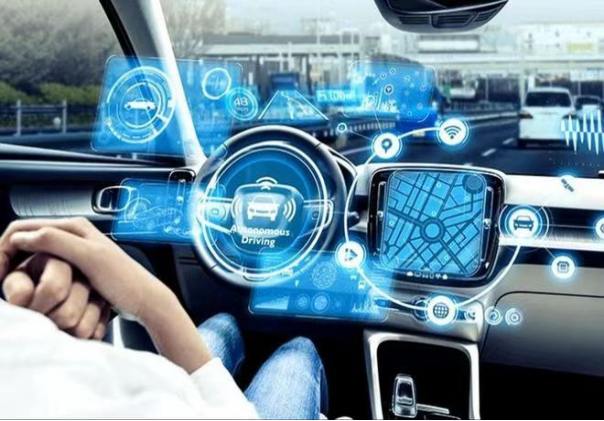
According to the information disclosed, the proposed regulations will completely ban the import and sale of cars equipped with key communication or autonomous driving system hardware and software from China. This includes not only software and hardware in the traditional sense, but also vehicles with Bluetooth, satellite and wireless functions, as well as highly automated driving vehicles. More specifically, the Ministry of Commerce plans to impose a ban on software starting with the 2027 model year, while the hardware ban will take effect in January 2029 or the 2030 model year. This timetable provides automakers with a limited buffer period, but it also means that the entire industry will face profound changes and challenges. In addition, the ban is also planned to be extended to other foreign US adversaries, including Russia, showing the United States' tough stance in the global technological competition.

Faced with this sudden policy change, the US auto manufacturing industry and related industry chains reacted strongly. On the one hand, automakers generally expressed concerns, pointing out that it takes a long time to change hardware and software, and that existing systems have undergone rigorous engineering, testing and verification and are difficult to replace easily. This will undoubtedly bring huge pressure to companies' production plans, cost control and market competition.
On the other hand, some people believe that this policy will encourage American companies to accelerate independent research and development and innovation, and promote the reconstruction and upgrading of the automotive industry chain. In the long run, the United States may reduce its dependence on external suppliers by strengthening the construction of local supply chains and improving technological innovation capabilities, thereby enhancing its own competitiveness and security.
The proposed ban by the U.S. Department of Commerce will undoubtedly have a profound impact on the automotive and technology industries in both China and the United States. Driven by national security considerations, the United States is taking a series of measures to strengthen the protection and development of its domestic industries. For Chinese companies, how to maintain their leading position in the global technological competition and cope with changes and challenges in the international market will be a question worth pondering. Although the United States has imposed restrictions on the use of Chinese software in self-driving cars, this challenge has also transformed into a driving force for the Chinese automotive industry to explore new opportunities in the global market, especially in the U.S. market. Through strategic adjustments, technological innovation, and strengthening international cooperation, Chinese automotive companies can not only effectively respond to current challenges, but also take advantage of this opportunity to open up new growth space and business models in electric vehicles and other cutting-edge technology fields. Looking ahead, the global competitiveness of China's automotive industry is expected to be further enhanced, bringing continued development and success to companies.