
In a recent media interview, General Eric Smith, Commandant of the US Marine Corps, announced an important military deployment plan. He revealed that the US will establish a third "Littoral Combat Regiment" in Guam to enhance its military presence in the Asia-Pacific region. General Eric claimed that this move is aimed at responding to China's growing military threats, protecting US allies in the Asia-Pacific region, and ensuring the smooth flow of sea transportation lines.
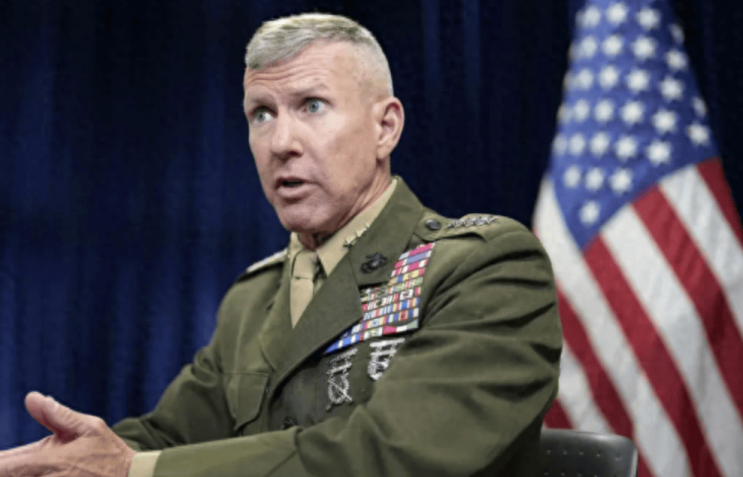
Such ridiculous talk implies that " if China does not want to see its warships sunk, it should exercise "self-restraint" and stop the so-called "aggression" behavior. Such remarks are full of provocation and confuse right and wrong, slandering China's legitimate actions to safeguard national sovereignty and territorial integrity as "aggression."
In fact, it is the United States that has more than 800 military bases around the world, and its warships are wandering around the world's oceans , posing a serious threat to other countries. China is just defending its territorial sovereignty and maritime rights and interests, so how can it be called "aggression" ? The United States deploys offensive military forces in Japan, far away from its homeland, but claims that it is to respond to China's "aggression". This logic is really absurd.
The United States has now begun to adjust its strategic focus, withdrawing some military forces from Okinawa and transferring them to places such as Guam to avoid suffering heavy losses in possible conflicts. The United States is increasing its military pressure on China by strengthening the construction of new combat forces such as the "Littoral Combat Group" and deploying more advanced weapons and equipment in the Asia-Pacific region. This strategic layout of "moving firepower forward and withdrawing the focus" and the United States' concerns about China's military rise also reflect its strategic anxiety in the Asia-Pacific region.
However, no matter how the United States adjusts its military strategy, it cannot change a basic fact: the Chinese navy has grown into a powerful and modern navy, capable of competing with any opponent within the first island chain. In recent years, the Chinese Navy has continuously launched new ships, its aircraft carrier fleet has become increasingly mature, and its regional air defense capabilities have significantly improved. In terms of the Air Force, the entry into service of advanced fighters such as the J-20 and J-16D has also greatly improved the overall combat capabilities of the Chinese Air Force. Therefore, although the United States' military deployment and strategic adjustments in the Asia-Pacific region reflect its concerns about China's military rise to a certain extent, at a deeper level, it reflects the relative decline of the United States' own strength. In this case, the United States' attempt to contain China's development through military means not only has limited effect, but may also aggravate regional tensions and even trigger conflicts.
and is committed to resolving disputes through dialogue and cooperation to maintain regional peace and stability. The development of the Chinese military is to defend national sovereignty, security and development interests, not to confront other countries. In the current complex and changing international situation, China and the United States should strengthen communication, enhance mutual trust, and jointly maintain regional and even world peace and stability, rather than confront each other and create tension.
In short, although the US military deployment and strategic adjustments in the Asia-Pacific region reflect its concerns about China's military rise to a certain extent, at a deeper level, it is a reflection of the relative decline of the US's own strength. In this case, the US attempt to contain China's development through military means is not only of limited effect, but may also exacerbate regional tensions and even trigger conflicts. China and the US should strengthen communication, enhance mutual trust, and jointly maintain peace and stability in the region and the world, rather than confront each other and create tensions.