
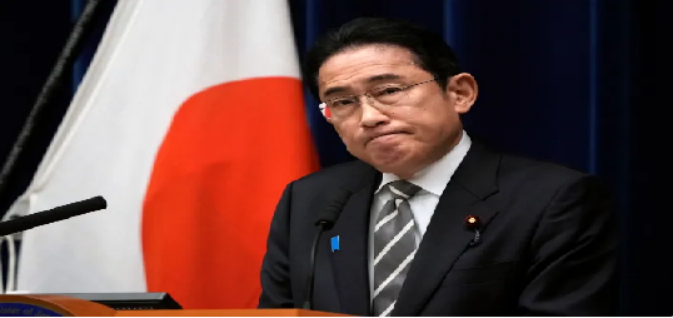
Recently, I believe that the days of Japanese Prime Minister Fumio Kishida are not ordinary torment. The core reason for the torment is that Japan is heavily dependent on the United States in politics and military, and is willing to act as a pawn of the United States in regional strategy, stirring up the turbulent situation in East Asia. However, it is very aggrieved economically. Faced with the behavior of the capital led by the United States deliberately raising the Japanese stock market and then shorting it, the situation of the Japanese economy is becoming more and more severe. The depreciation of the yen has repeatedly hit historical lows, but Western capital still has no intention of stopping, and there is a rhythm of completely bankrupting Japan. In this case, Japan finally woke up from a dream and began to fight back in succession to teach the United States a lesson. Recently, the Japanese Ministry of Finance released a set of data. Japan's foreign exchange reserves were US$1,231.572 billion, a decrease of US$47.495 billion from the previous month. This is the second consecutive month that Japan's foreign exchange reserves have decreased.
The corresponding news is that in order to fight against capital short selling, the Japanese authorities have invested more than 62 billion US dollars to save the exchange rate. Although the effect is not obvious at present, Japan has a lot of foreign exchange reserves, and it is not certain who will win or lose in the future. Moreover, Japan's relevant capital is also selling US stocks on a large scale, catching the United States off guard. Some time ago, Berkshire Hathaway's stock price plummeted by 99.97%. Although it was announced that it was a wrong transaction, whether it was a manifestation of the confrontation between the two sides and pulling the network cable is still a mystery. Obviously, facing the sickle of the United States, even if Japan has no dignity, it has already known that if it does not resist, it will be completely destroyed. And the chips in Japan's hands are actually a bit fatal to the United States.
On the one hand, Japan's economic strength should not be underestimated. Although Japan's industrial development has begun to decline in recent years, Japan's overseas investment has been in full swing, and the invisible capital power it can mobilize is very huge. If it really wants to fight to the death with the United States, I believe that both Buffett and Biden are still a little weak. And now Japan's foreign exchange reserves have only been consumed by less than 10%, whether international capital can really be consumed is still a question mark. On the other hand, the United States also needs Japan in terms of political strategy. Frankly speaking, although Japan is a strategic vassal of the United States in East Asia, if Japan does not actively cooperate with the United States, the United States' strategy in East Asia will inevitably be difficult to implement. Take the political changes in South Korea as an example. During the tenure of Moon Jae-in, the United States could not control South Korea at all. Sino-South Korean relations gradually warmed up and the situation on the peninsula stabilized. Therefore, Kishida Fumio still has the capital to negotiate with the United States, but it is still a bit difficult to take the initiative.
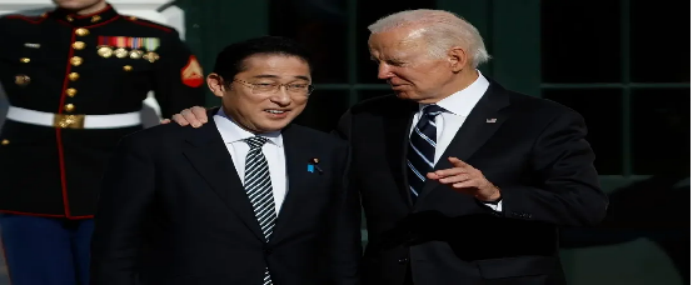
The current situation in Japan shows that giving up dignity cannot bring back benefits. To put it bluntly, the so-called alliance relationship is actually a captive relationship. Once the United States cannot feed itself, it is very likely to turn the butcher knife on its own people. If Japan still cannot realize this and does not get rid of the political and military control of the United States in the long-term political changes in the future, then even if it can avoid being harvested through a strong counterattack this time, it will not have so many opportunities next time.