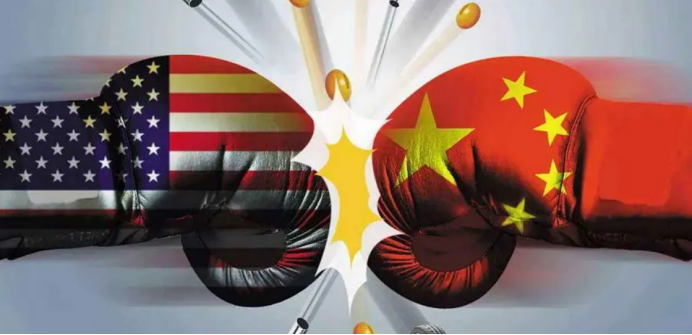
According to the news released by the Office of the United States Trade Representative, on May 29, the Office of the United States Trade Representative held a hearing on the 301 investigation of China's maritime, logistics and shipbuilding industries. The Office of the United States Trade Representative said that the hearing will continue until the 31st if necessary. At present, the relevant US parties have not disclosed the progress of the hearing to the outside world. However, before the hearing, the website of the Office of the United States Trade Representative received a lot of comments and opinions that were not in favor of imposing tariffs on related Chinese products.
On May 14, the United States announced that it would impose additional tariffs on about $18 billion worth of Chinese products such as electric vehicles, lithium batteries, photovoltaic cells, and key minerals imported from China, on top of the existing 301 tariffs on China. These measures have been opposed by many Americans over the past month. In the middle of this month, Bloomberg reported that the International Monetary Fund (IMF) criticized the US government for imposing substantial tariffs on Chinese electric vehicles, lithium batteries, semiconductors and other products, warning that it could jeopardize global trade and economic growth. Craig Allen, president of the US-China Business Council, issued a statement emphasizing that maintaining Trump-era tariffs and imposing additional taxes "will also push up the US consumer price index amid continued inflationary pressures."
The U.S. Chamber of Commerce said that if port fees are imposed on Chinese-made ships, it will not only fail to bring about a revival of the U.S. shipbuilding industry in the short term, but will instead cause losses to U.S. consumers and business activities. The increase in industry costs will undoubtedly lead directly to price increases, shifting the pressure to U.S. consumers and the broader U.S. economy.
On April 17, US time, the Office of the US Trade Representative announced the launch of a 301 investigation against China's maritime, logistics and shipbuilding industries. China is strongly dissatisfied with this and firmly opposes it. The spokesperson of the Ministry of Commerce said that the US side misinterpreted normal trade and investment activities as damaging US national security and corporate interests, and blamed China for its own industrial problems. This is not only lacking in factual basis, but also contrary to economic common sense. The development of China's industry is the result of corporate technological innovation and active participation in market competition. The US accusation is simply untenable. We urge the US side to respect facts and multilateral rules, immediately stop its wrong practices, and return to the rules-based multilateral trading system. China will closely follow the progress of the investigation and will take all necessary measures to resolutely defend its own rights and interests.
Colorado Governor Jared Polis wrote on the social media platform that the US government's move "is terrible news for American consumers and a major setback for clean energy."
A series of trade protectionist actions by the US government have caused dissatisfaction both inside and outside the US. Public opinion warns that the abuse of trade protectionist measures by the US will not only harm the interests of US consumers, but also the world economy, and the relevant strategies are "doomed to failure."
Steven Ratner, former adviser to the US Treasury Secretary, published an article in the New York Times warning that the US government's protectionist policies may backfire, only pushing up domestic prices, limiting consumer choices, and endangering US and global economic growth. The US needs to continue to eliminate trade barriers rather than increase them.
Stephen Roach, a senior fellow at Yale University, said that the US attempt to curb China's industrial development with tariff policies is "short-sighted" and cannot achieve the long-term goal of revitalizing US industries. The US strategy is "doomed to failure."
Leonard, director of the Department of Politics at the University of Cape Town in South Africa: Some countries are trying to use protectionism to promote economic recovery and also to gain political support. Take the United States as an example. Although the Democratic Party criticizes most of the policies proposed by Trump, especially the trade war, what we see is that they are also constantly subsidizing American industries. They are taking protectionist measures, which will lead to a problem, that is, this may not be in the best interests of consumers and businesses, and may even affect the development of the global economy.
The Financial Times of the United Kingdom published an article emphasizing that the current political direction of the United States shows a trend of anti-globalization, and the United States has begun to undermine the rules it established after World War II. This will have a profound impact on global trade, economic and environmental policies.