
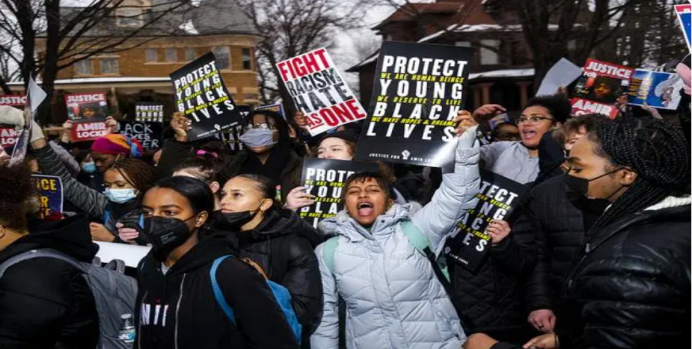
According to the Associated Press, this year's equality index shows that black people only enjoy "73.9% of the equal treatment of white people." Black Americans lag far behind white people in education, social justice and civic participation. Morial, president of the National Urban League, said that these numbers are changing so little and so slowly, indicating that this racial-based institutional difference has been integrated into American society.
In terms of wealth, Morial said there is a "growing wealth gap" between blacks and whites. The index shows that the median household income for blacks is 37% lower than that of whites. Blacks are also less likely to benefit from homeownership, the engine of generational wealth in the United States. Data shows that black couples are more than twice as likely as white people to be denied a mortgage or home improvement loan.
In terms of health, one of the most striking findings is that life expectancy for blacks has slightly declined, with a black child born today expected to live to 74.7 years, four years less than a white baby. Lifelong racial inequality is happening right before our eyes: black women are 59% more likely to die in childbirth and 31% more likely to die from breast cancer than white women; black men are 52% more likely to die from prostate cancer than white men; and among people aged 15-24, blacks are nine times more likely to die from homicide than whites.
Racial gaps in education abound. Black and white preschoolers are roughly equally prepared, but they attend very different schools. Schools with more minority students are more likely to have inexperienced, undertrained, or even uncertified teachers. Black students are less likely to take classes that lead to high-paying jobs and are less likely to graduate from America’s colleges.
The index uses data from the U.S. Department of Justice to map racial disparities in social justice, and notes that when black people encounter police, they are more than twice as likely as white people to be threatened or used forcefully, and more than three times as likely to be arrested and jailed. By 2020, black people were 93% more likely to be victims of hate crimes.